That time of year
Posted on December 31, 2012
One of the things I wanted to do during this holiday break was catch up on my reading. I have far more books than I could possibly get through in one calendar year. I keep buying them, intending to read them later. I also get a lot of books as gifts.
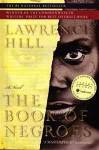 Of the books I did get to this year, Lawrence Hill’s The Book of Negros, was my favourite. It was published in 2007, and I wish I had gotten to it sooner! Hill’s protagonist, Aminata Diallo, who was abducted as a child from her village in West Africa and sold into slavery, continues to haunt me. The story had such an effect on me that I couldn’t pick up another book for two weeks.
I also thought Ins Choi’s play, Kim’s Convenience, was brilliant. The story hit close to home. Both Ins and I, although we have never met, immigrated to Canada in1975, and had families that worked in variety stores in downtown Toronto. I wrote about this play in an earlier blog.
Now that it is 2013, there are several lists of ‘the best books of 2012’ published everywhere. Here are a few to check out.
Writers who passed away in 2012
Posted on December 29, 2012
“Don’t talk about it; write.” – Bradbury, 1976
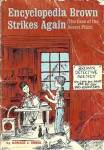
I recently read a list of writers who passed away in 2012. Donald J. Sobol, writer of the Encyclopedia Brown series, passed away in July. Leroy, aka Encyclopedia Brown, is a boy detective who used his intelligence to solve neighbourhood mysteries. Some of my fondest childhood memories in Canada include going to the public library where I could escape into books – lots of them. Encyclopedia Brown was a favourite because solving whatever mystery that was thrown at both Encyclopedia and the reader, left me feeling both satisfied and smart.
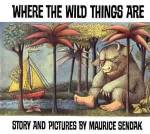 Another children’s favourite, Maurice Sendak, who wrote Where the Wild Things Are, passed away in May.
I was first introduced to Ray Bradbury’s work in high school. Fahrenheit 451 continues to be on many English class reading lists. His short stories also remain popular. Surprisingly, I only found out recently that there’s a prequel or rather a companion to Fa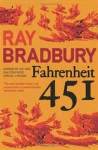 hrenheit entitled, A Pleasure to Burn. Bradbury passed away in June.
For a list of writers who passed away this past year, click here.
For more Ray Bradbury quotes, click here.
Overcoming stage fright
Posted on December 28, 2012
Years ago, as a way to gain greater confidence speaking in front of an audience, I signed up for a series of singing workshops. I recently found the notes I took during the workshops. The following was written after my first class.

“I sang to the floor.”
The lights were too bright, and right away my body tensed up sensing the reality of the situation. I was on stage!
I had prepared for this. I tried to take a deep breath but my throat closed up. I was shaking. I was so busy trying to conceal my nervousness that I didn’t notice that the music had begun. I opened my mouth and looked in front of me, and just as quickly, dropped my eyes. I started singing.
I desperately wanted to look up but knew no words would come out if I did. So I did the only thing I could: I sang to the floor. It felt safe as long as I pretended that I was not on stage with strangers’ eyes resting on me. I hid behind my hair, kept purposely long for that reason. I could hear my own voice echoing softly in the air and to my surprise, liked the sound. It allowed me to get through to the end.
The reaction of my classmates was encouraging. Suddenly, the room felt cozy.
The first exercise that Art, the instructor, assigned me was to make eye contact with each person in the room. Easier said than done. I reminded myself that I had already sung the song once and no one had asked me to leave. I drew strength from the energy I picked up in the room.
It was a challenge made easier by the warmth and support of my classmates who, with their smiles and silent encouragement helped me get through the song again. It felt great! What I learned most from this exercise was that it was actually EASIER to perform in front of a crowd if I made eye contact because I got a response from the people in front of me; an acknowledgement that they were listening. Suddenly performing was made an exchange between me as the performer and them, as the audience. It wasn’t about me on stage doing everything.
The last exercise was called Copycat. Not only did I have to make eye contact with my classmates, I had to mirror whatever movements they made. This was tricky at first because singing suddenly entailed focusing on the audience and not the song. I found myself doing everything from running my fingers through my hair to sticking out my tongue in the middle of the song! By the end, I realized I was so busy following the audience’s movement that I forgot to be nervous on stage! It was amazing. And this was only my first class.
To read more, click here.
Growing up Buddhist at Christmas time
Posted on December 18, 2012
 My first memory of Christmas is back in South Korea. I must have been five or six when I found a green-beaded necklace under my pillow. I remember that the first thing I did was look at it under the blanket to see if it glowed. It didn’t. Still, it was the most precious gift I had ever received. When I asked my mother where it had come from, she told that Santa-harabahji (Grandpa Santa) had left it for me.
Although we dutifully gave presents to all of our elementary school teachers for Christmas once we immigrated to Toronto, we didn’t have a tree. My mother made all the gifts we took to school – knitted hats and scarves.
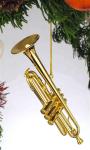
By 1991, I was working part-time and had money for the first time. I decided that year I would give my family our first ever Christmas tree. I spent over a thousand dollars, spread over three different credit cards, on a tree and gold music-themed decorations. My parents didn’t object and even seemed to admire the seven-foot evergreen that I plopped in the living room by the TV. My brothers referred to it as the “Buddha Tree.” I didn’t tell any of them how much I had spent.
The beauty of growing up in a Canadian Buddhist household was that we were open to celebrating and acknowledging other faiths. As children, we decorated and looked for Easter eggs, learned the rules to play the dreidel game during Hanukkah, and ate rice-cake and dumpling soup on lunar New Year’s Day. Being in Canada, surrounded by people of so many different ethnicities and cultures, it wasn’t about religion. It was about having a reason to celebrate and have fun; a reason to be together and be happy.
“Cool to be Korean”
Posted on December 12, 2012

There are 14 consonants and 10 vowels in the Korean language.
My 13-year-old daughter had never expressed an interest in learning the Korean language until “Gangnam Style” by Psy, the Korean rapper, gained worldwide popularity. In her eyes, it was suddenly “cool to be Korean”.
Her question to me: how come you never learned Korean?
When we first came to Canada, my parents’ biggest obsession was for their children to learn English. We were even encouraged to speak it at home. I never stopped to think that we were sacrificing the Korean language in the process, especially because back then, all I wanted was to lose whatever was Korean about me. I was in grade three when it hit me that I could lose my Asian last name by marrying someone white one day.
I keep thinking that it’s too late for me to learn to become completely fluent in Korean. Maybe. Maybe not. It would be wonderful to have access to Korean literature as it was written instead of in translation. The Korean language is beautiful and there are some phrases and expressions that don’t exist in English.
Worth checking out:
“toenails twinkle”
Posted on November 18, 2012
Dylan Thomas
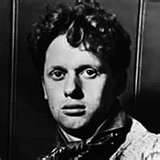
I was riding the subway when a group of teenagers were reading and talking about the poem wedged between two ads. For over ten years, Poetry on the Way, has been placing short poems on TTC subways, cars, and streetcars in Toronto.
“Poetry is what gets lost in translation,” said one of the kids quoting, Dylan Thomas. I was most impressed!
Ever since I first read, “Do not go gentle into that good night” in high school, I’ve admired Thomas’ poetry.
Here are a few thoughts on poetry by Thomas worth passing along:
“A good poem is a contribution to reality. The world is never the same once a good poem has been added to it. A good poem helps to change the shape of the universe, helps to extend everyone’s knowledge of himself and the world around him.”
“Poetry is what makes me laugh or cry or yawn, what makes my toenails twinkle, what makes me want to do this or that or nothing.”
Creative waiting
Posted on November 12, 2012
 I’ve never been good at waiting. It often leaves me feeling restless, impatient, and even anxious. I used to do a lot more waiting in the past – when I had to actually go into a bank to do my banking, when I took public transit everywhere, and when I used to hand-write letters, mail them off, and wait weeks or even months for a response.
I resented waiting because I didn’t have a choice but to endure it.
Most recently though, I’ve come to realize that as a writer I should appreciate the opportunities that come as a result of waiting. It’s the bald-headed cashier with the purple lipstick who will spark a story idea. Give her a name. A few idiosyncrasies. A temper. What would she do if she was forced to wait 40 minutes in a supermarket line, a crying baby and a mother who refuses to get off her cell phone behind her?
The writing circle
Posted on October 21, 2012
 It’s been five years since I joined the 11th Floor Writers. Of all the benefits that I have reaped over the years, the following three are the most significant.
The circle has kept me a disciplined writer.
Because we have regular meetings, the circle has kept me motivated to write. We push each other as necessary to keep everyone working on something. The whole purpose of being in the group is to write and receive feedback. We work to move each other forward.
The circle has helped me better understand my writing strengths and needs.
Getting feedback is absolutely critical as a writer. Members point out discrepancies, and make recommendations to strengthen the submitted pieces of writing. My writing skills have also further developed by critically examining the works of other writers and trying to provide meaningful and constructive feedback.
Because we meet face-to-face, friendships have formed over the years.
Friendships with other writers have become especially important to me as I evolve in this craft. Fellow writers who believe in each other and encourage each other to forge ahead is critical when we become unmotivated or uninspired to write.
Five years ago, I submitted a raw first chapter to the circle. It was a humbling experience. Over the course of several years, I have worked through an entire novel manuscript. In June 2012, this manuscript won The Marina Nemat Award, a writing award from the University of Toronto. I attribute much of my growth as a writer to the ongoing support and guidance I get by being a member of a strong and inspired writing circle.
[This entry also appears on the 11th Floor Writers’ blog. Click here.]
Koreans here and there
Posted on October 15, 2012
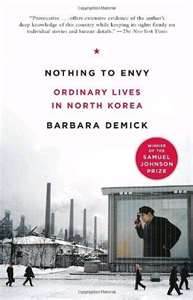 I was surprised to see so many books about North Korea in the Social Science section at Chapters, the bookstore. I picked up Nothing to Envy: Ordinary Lives in North Korea by Barbara Demick.
Nothing to Envy chronicles the lives of six North Koreans – a teenage couple secretly in love, a female doctor, a homeless boy, a factory worker, and her rebellious daughter – over a period of fifteen years.
My fascination with the lives of ordinary North Koreans grew after hearing about a friend’s son who, upon turning 18, actually visited the country on his own. I’m sure that he stood out. He’s over six feet tall with strawberry blond hair! It was fascinating to hear about his visit, and I couldn’t help but think about the stark contrast between the lives of North and South Koreans. It also got me thinking about the lives of Korean-Canadians which again is so different from the two Koreas.
We need more of this…
Posted on September 14, 2012
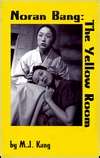 “Noranbang: The Yellow Room,” is written by M.J. Kang, a Korean-born playwright. I found her play in a collection of contemporary Asian-Canadian drama entitled, “Love + Relasianships.”
“Noranbang” is about a Korean family living in Toronto, Canada, during the late 1970s. This is only the second play that I’ve read by a playwright of Korean heritage with a story set in Canada. I especially enjoyed seeing the Korean words and phrases woven throughout the dialogue. I wish such books and plays existed when I was a child, or if they did, I had known about them. I was never exposed to any books by Asian writers in either high school or university. I hadn’t even thought to think about them.
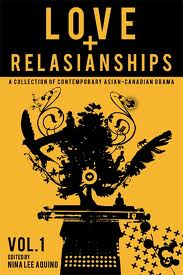
The other plays in this collection are: “Yellow Fever” by R.A. Shiomi, “Bachelor-Man” by Winston Christopher Kim, “Maggie’s Last Dance” by Marty Chan, “Mother’s Tongue” by Better Quan, and “The Plum Tree” by Mitch Miyagawa.
 ann y.k. choi