David Adams Richards
Posted on November 3, 2014

With David Adams Richards at the IFOA
I met up with David Adams Richards this weekend at the International Festival of Authors (IFOA) in Toronto. He was my mentor at The Humber School for Writers.
David is one of the most accomplished writers in Canada. I still can’t believe that I was lucky enough to work with him. At all times, he encouraged me to persevere. We completed the first draft of my novel in only thirty weeks!
David’s new book, Crimes Against My Brother, was released earlier this year (Doubleday Canada).
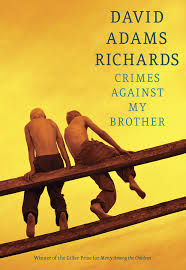
New book by David Adams Richards
Promoting Korean literature
Posted on April 3, 2014
Jae Kim is currently a student at the University of Toronto. In September of 2013, he founded the University of Toronto Korean English Literature Society (KELS). His goal is to encourage thoughtful reflection of Korean contemporary culture. He shared that while Korean pop music, film, and cuisine have gained tremendous popularity within North American society, books and other literary works by writers of Korean heritage continue to pass under the radar. You can find out more about KELS by visiting its website.
 I just started reading Three Generations by Yom Sang-seop. It’s the first Korean book I’m reading that has been translated into English. The story, set in Japanese-occupied Korea during the 1930s, chronicles the highs and lows of the Jo family. It is considered one of the most influential works of fiction in modern Korean literature. You can read more about Yom Sang-seop’s book here.
Writers as readers
Posted on January 22, 2014
 Writers love to read. It was my turn to post something on the 11th Floor Writers‘ blog so I asked the members what they were reading. They had a lot to share. Please click here to continue.
Today’s Sonnet
Posted on January 2, 2014
 I had no idea that the sonnet was alive and thriving today. In some cases, the traditional form has been reinvented so much that the only identifiable factor is the sonnet’s fourteen-line length.
For class, I need to write two sonnets this week – a traditional one and a contemporary one. I’m not sure which one will be easier to pen.
Examples of contemporary sonnets:
“The Heart’s Location” by Peter Meinke (scroll down the page to the poem)
W.H. Auden wrote one of the first sonnets not to follow a rhyming scheme:
“The Secret Agent” by W.H. Auden, 1928
An entertaining sonnet that follows the traditional form:
“Death of a Sonnet writer” by Scott Ennis
One of my favourite sonnets:
“Holy Sonnet XIV” by John Donne, 1609
What is a sonnet?
A great print resource for poets:
Wendy Bishop provides advice for writing and revising sonnets and sonnet-like poems in her book entitled Thirteen Ways of Looking for a Poem: A Guide to Writing Poetry.
Contemporary Poetry
Posted on November 30, 2013
 In Thirteen Ways of Looking for a Poem: A Guide to Writing Poetry, Wendy Bishop states that “contemporary poets prefer rhyme that doesn’t call attention to itself; concrete, particular images; and conversational… language.” Since starting a course in contemporary poetry, I’ve been intrigued by Billy Collins’ poems. They epitomize the “unexpected phrases and strong sensory details” that Bishop includes in her characteristics of contemporary poetry.
See or hear Collins read his poems by clicking on the following links:
Forgetfulness (animated)
I Chop Some Parsley While Listening to Art Blakey’s Version of ‘Three Blind’ Mice
Some Days (animated)
Walking Across the Atlantic (animated)
Now and Then (animated)
The Trouble With Poetry
Stories for writers
Posted on October 27, 2013
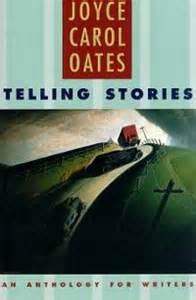 I’ve had to read many interesting stories since enrolling in a fiction class as part of my MFA studies. I wanted to pass along some of the titles.
The following stories are housed in Joyce Carol Oates’ book entitled Telling Stories: An Anthology for Writers. You can read them online by clicking on the story titles.
“Aren’t You Happy For Me?” by Richard Bausch
An excellent example of how a story can be constructed using mainly dialogue. How would you react if your 22-year-old daughter phoned one day and said that she was engaged to a 63-year-old man?
“That Evening Sun” by William Faulkner
Written in 1931, this is a dark and disturbing story about a white family’s reaction to the fears of their black servant, Nancy.
“In the American Society” by Gish Jen
Told from the point of view of a Chinese-American girl, this story looks at a family’s attempt to assimilate into American culture and sheds light on the immigrant experience.
“Father’s Last Escape” by Bruno Schulz
If you’re a fan of Franz Kafka’s Metamorphosis, you’ll appreciate this story. In this story, the father turns into a crab which the mother later cooks for dinner.
“Borges and I” by Jorge Luis Borges
A short autobiographical work that looks at the private versus the personal self. It ends with the line, “I do not know which of us has written this page.”
Seamus Heaney, 1939-2013
Posted on August 31, 2013
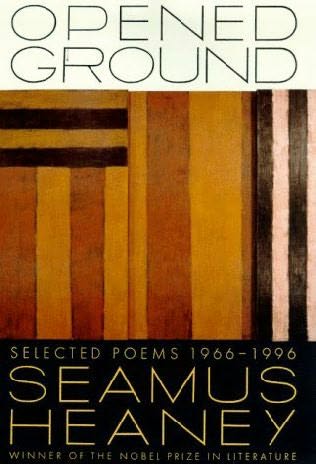 I had never heard of Seamus Heaney until I visited Northern Ireland, my husband’s family of origin, in 2004. We were visiting with a cousin in County Tyrone when I picked up a book on the coffee table and asked a room full of family: “Who’s Seamus Heaney?” I heard a gasp, followed by silence, then quiet mumbling.
It became the family’s mission: Educate the ignorant visiting Canadian about County Tyrone’s most celebrated poet – which they did with great passion and joy. The trip became a crash course on Heaney – his life and his work, and the impact that he had on his readers around the world.
I was very sad today to learn of his passing on Friday, August 30th, at the age of 74.
Read more about Heaney:
“Seamus Heaney, Nobel Prize-winning poet, dies” – CBC News
“Seamus Heaney, Irish Poet of Soil and Strife, Dies at 74” – New York Times
Inspired
Posted on July 29, 2013

Statue of Lincoln by the Ohio River, Louisville Waterfront Park
In a letter to a friend, Abraham Lincoln wrote about his visit to Louisville, Kentucky in 1841. He was sitting on the waterfront (where I took this photo) and saw enslaved African-Americans on their way to New Orleans. He was deeply disturbed by what he saw and wrote: “That sight was a continual torment to me…” I was recently in Louisville and was intrigued by the city’s rich history. Kentucky was a border state during the American Civil War, and Lincoln’s 1863 Emancipation Proclamation did not apply to it. Slavery continued to be legal in Kentucky until 1865 when the Thirteenth Amendment, which abolished slavery, was ratified. Today, the city of Louisville is a beautiful and culturally rich state. It was chosen as Lonely Planet’s top US tourist destination for 2013.
More on my visit to Louisville.
Dream, set goals, celebrate
Posted on July 5, 2013

My daughter Claire’s graduation, June 2013
June and July – the months of graduations, commencements and convocations. Over the years, I’ve attended them as a student, as a teacher, and most recently as a parent and as a guest. This year, I have had the honour of speaking at two ceremonies. The following thoughts highlight the key messages I was trying to convey.
Do take the time to celebrate. Like the Roman god Janus, graduation has two faces – one looking back, the other forward. In other words, graduation marks both an end and a beginning. Celebrate your accomplishments. Doing so will make you feel good, and energize you to be excited about what is to come.
Learn the difference between dreams and goals. Since I was an immigrant child learning English, I have dreamt about publishing a book. It was during my five years in the Creative Writing program at U of T’s School for Continuing Studies that my outlook and attitude towards writing shifted. I moved from having dreams of writing to having goals of being published. There are significant differences between dreams and goals. Dreams allow you to be lazy; there are no deadlines and no accountabilities. Goals, on the other hand, require focus, action, and adherence to deadlines. It takes little effort to dream and to fantasize. It takes a lot of hard work and planning to reach your goals.
Dream, set goals, celebrate. Repeat.
[This entry also appears on the 11th Floor Writers’ blog.]
Beyond the corner variety store
Posted on June 30, 2013
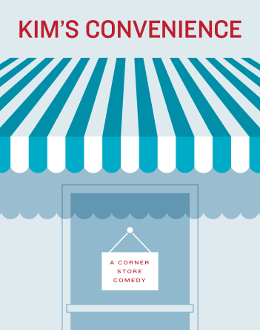
A play by Ins Choi
I finally saw Kim’s Convenience. What a great play! It made me laugh, and when it hit a little too close to home, it made me cry… The play, written by Ins Choi, takes place in a Korean-owned convenience store in downtown Toronto. I’ve wanted to see this play for a while now and wrote about it in an earlier blog. The play begins its national tour next month.
Read more about the play:
 ann y.k. choi